Built on the belief
that distance
costs quality.
We don't move coffee.
We move the documentation that closes the distance.

A single,
uncomfortable truth.
Most specialty coffee has changed hands three times before it reaches a roastery.
Each handover adds opacity. Each margin compounds distance. Each layer between origin and cup erodes what made the coffee worth sourcing in the first place.
"The quality of a cup is determined long before it reaches a roaster."
We built Qahwa around a single discipline: documentation closes the distance that geography cannot. Our supply comes from one cooperative, in one province of Burundi, producing one varietal at one quality tier — and every shipment arrives with an ICO Certificate of Origin, a Burundi Ministry of Agriculture phytosanitary certificate, and the cooperative's own cupping report. When your green coffee arrives, you know exactly where it grew, who processed it, and what it scored on the cupping table — not because we made the trip, but because the documentation made the trip.
Muyinga Province · one cooperative · FW 15+ specialty Arabica. One origin done deeply, not many done shallowly.
Documented per shipment by the cooperative. Recent lots have cupped between 83 and 86.5. Seasonal variation expected.
ICO Certificate of Origin · Burundi Ministry of Agriculture phytosanitary · Cooperative cupping report. Per shipment.
On every enquiry. Real people, no automation. You speak to the desk directly.
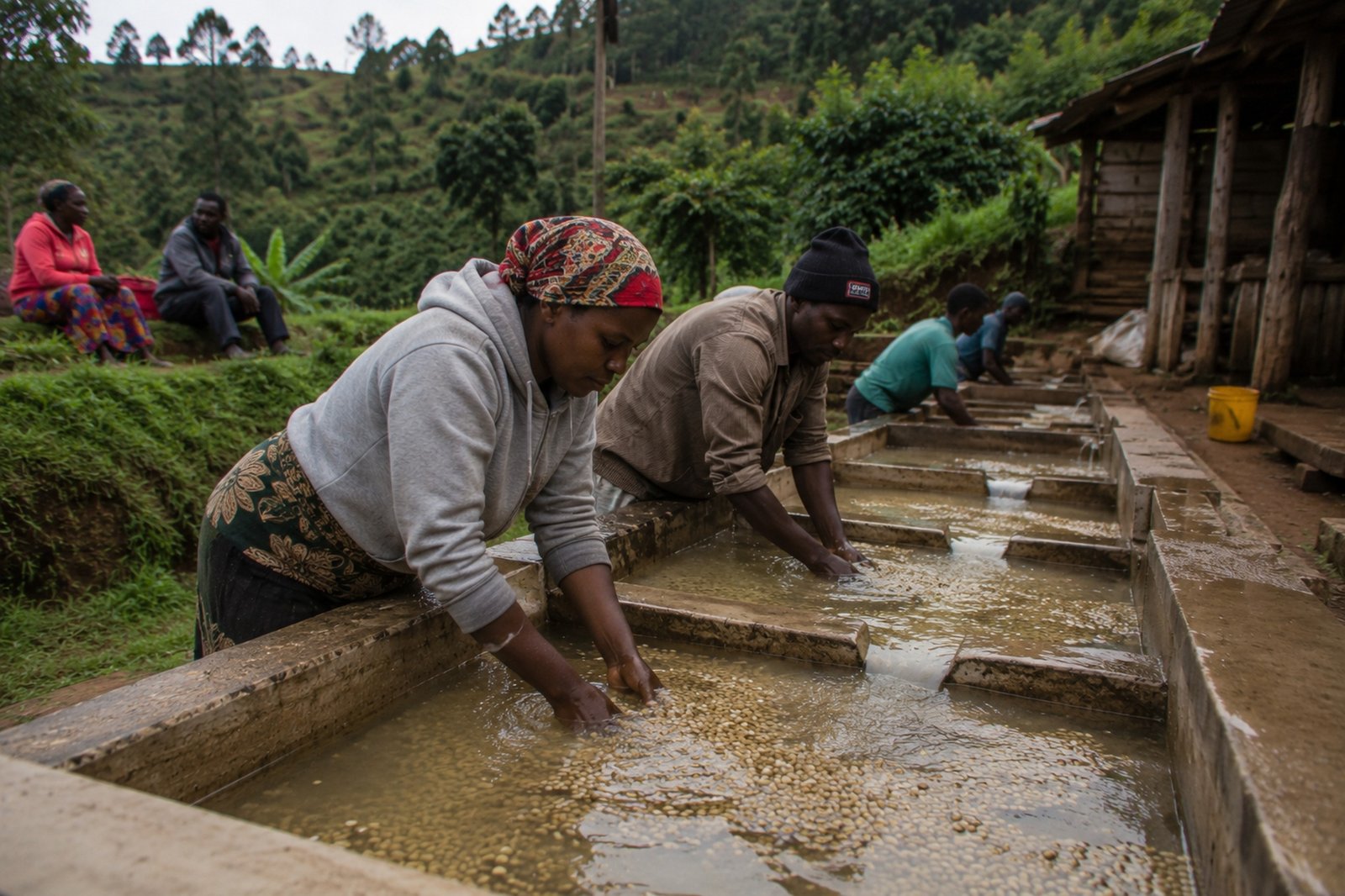
Kavugangoma, Muyinga Province, Burundi. Every Qahwa relationship is built outward from a single documented origin point.
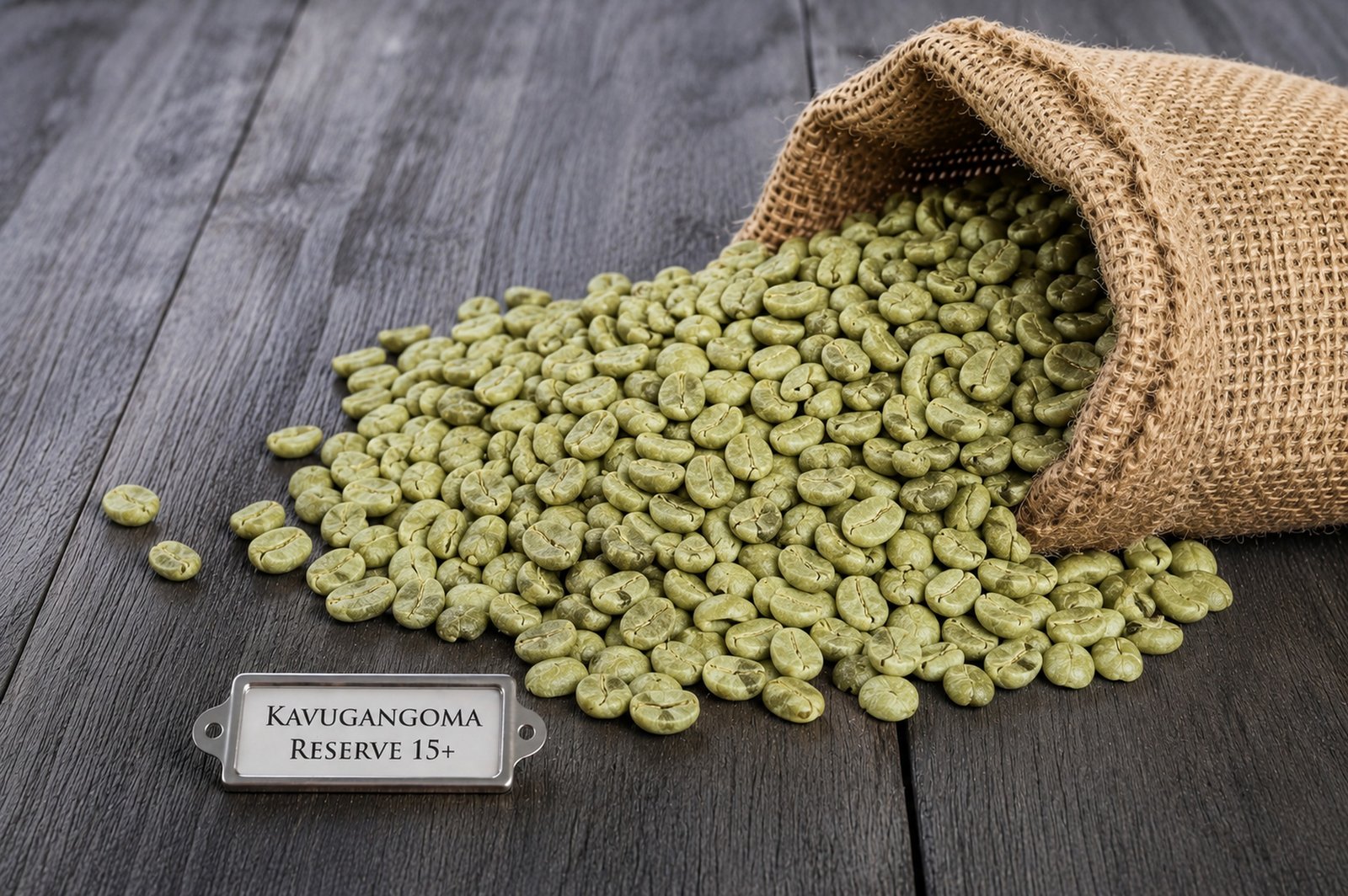
Reserve 15+, Estate TT and Natural Reserve. One station, three processing approaches, complete documentation on each.
Sourcing team responds within one business day. No automation. No call queues. The person who replies has cupped the coffee.
From a single discipline
to a documented portfolio.
We did not begin with a catalogue. We began with a question — whether a small operator could build a specialty green coffee business in which every claim was backed by documentation, every lot was cupped at origin by the cooperative that produced it, and every shipment travelled with the papers that prove what it is. Each milestone below answered part of that question.
A documentation-first
conviction.
Qahwa established in Dubai and South Africa with a single operating principle: every lot must be documented at every step, every claim backed by evidence the buyer can request.
Burundi · single
cooperative line.
First documented supply line opened to a Muyinga Province cooperative producing FW 15+ specialty Arabica. ICO Certificate of Origin, Burundi Ministry of Agriculture phytosanitary, and cooperative cupping reports become standard with every shipment.
Reserve 15+
received and documented.
Lot 2610 arrived under full document chain. FW 15+ Premium grade. Cooperative-cupped at 86.5 SCA: delicate floral aroma, everlasting bold sweetness, chocolate and tea notes, mature blend, purified cup.
Three lots,
one origin.
Estate TT and Natural Reserve added alongside Reserve 15+. Same cooperative, three lot tiers. Single origin done deeply, rather than many origins done shallowly.
Where Qahwa
begins.
"From ritual to relationship."
The name Qahwa was chosen deliberately. It is the word that connects the beverage to its original cultural context: not a commodity, but a ritual. An offering. Something prepared with attention and shared with intention.
We are based in Dubai and South Africa — positioned between the global hospitality market and the East African growing regions that supply some of the world's most exceptional green coffee. Our supply line runs to a Muyinga Province cooperative in Burundi, where the Kavugangoma washing station processes the FW 15+ Arabica that forms the foundation of everything we offer. The relationship is documented, the cupping is reported, and the supply chain is traceable on paper from cooperative to port.
From the Arabic root referring first to wine, then to coffee — a word that travelled with the beverage from the highlands of Yemen to the coffeehouses of Istanbul, Cairo and beyond. To say Qahwa is to invoke five centuries of coffee culture. We carry that weight deliberately.
Four commitments.
No exceptions.
Knowledge
Every lot comes with complete documentation — origin, altitude, varietal, harvest season, process, moisture content and SCA cupping scores. A buyer who purchases from Qahwa knows more about their green coffee than almost any other source.
Product
We carry FW 15+ specialty Arabica from a single Burundi cooperative. Cooperative-cupped at 83+ SCA on every shipment, with recent lots scoring between 83 and 86.5. Seasonal variation expected — per-lot cupping report on request.
Trust
We respond within 24 hours. We send samples before we ask for commitments. We price transparently. We do not oversell availability or misrepresent cup character. Repeat relationships require consistent honesty.
Hospitality
We serve roasteries, cafés and hospitality operations that source with documentation. We understand both the commercial pressures of a coffee programme and the quality standards that define a premium guest experience.
"The quality of a cup is determined long before it reaches a roaster. It is determined by who processed it, at what altitude it grew, and how carefully those two things were documented."
— Qahwa Coffee Group · Sourcing Philosophy
Direct from a
single cooperative.
Our sourcing model prioritises cooperative-level documentation over broker networks. We work through a documented supply chain to a single Muyinga Province cooperative — the same producer, the same washing station, the same FW 15+ standard, season after season. The cooperative cups every shipment before export, and the cupping report ships with the coffee.
This approach means we carry fewer lots than a traditional importer — but we carry them with a depth of knowledge that allows us to match specific cup profiles to specific roastery programmes with accuracy. Single origin, three lot tiers, full documentation.
We are not a catalogue. We are a documented supply chain.
One country,
one cooperative.
Burundi
Arabica · Fully washed (wet) process · Documented FW 15+ grade · Recent lots cupped between 83 and 86.5 SCA per cooperative report. Three lot tiers available: Reserve 15+ (Premium), Estate TT (Commercial), Natural Reserve.
Further East African origins in development
Small, intentional,
hospitality-aware.
Qahwa is a small operation. That is a deliberate choice, not a limitation. Small means every client relationship is handled personally. Every lot enters our supply with our own due-diligence on the documentation chain. Every sample request is followed up by someone who has cupped the coffee they are recommending.
We are positioned between Dubai and South Africa — two markets with sophisticated coffee cultures, demanding hospitality sectors, and buyers who know the difference between specialty grade and commodity dressed as specialty.
We do not have a sales team. The same person who answers your first email signs off on the lot allocation, monitors the shipment, and is on the other end of the WhatsApp when the green coffee lands in your roastery. The conversation is grounded in firsthand knowledge of what's in the bag — not a spec sheet inherited three steps removed.
Qahwa Coffee Group · Dubai, UAE & South Africa · Est. 2024
Documentation-First
Every commercial conversation is grounded in evidence. We know what we offer because every lot arrives with the ICO Certificate of Origin, the Burundi Ministry of Agriculture phytosanitary, and the cooperative's own cupping report.
Dual-Market Position
Operating between Dubai's global hospitality market and South Africa's emerging specialty sector gives us unique commercial intelligence on premium buyer expectations.
Partnership Model
We structure supply agreements for long-term relationships — same quality, same producer, season after season. Partnership-grade reliability, not spot-market randomness.
Hospitality-Aware
We understand the operational pressures of running premium coffee programmes at scale. Our minimum orders and documentation standards are built for hospitality group procurement.
Jesse A. Jobe
Director of Operations
Founded Qahwa on the conviction that the integrity of a green coffee buy is decided by the documentation behind it. Based between Dubai and South Africa, with a documented supply chain to a single Muyinga Province cooperative in Burundi — for roasteries and hospitality groups that specify origin before they specify price.
Coffee intelligence,
quietly told.
From Cherry to Cup
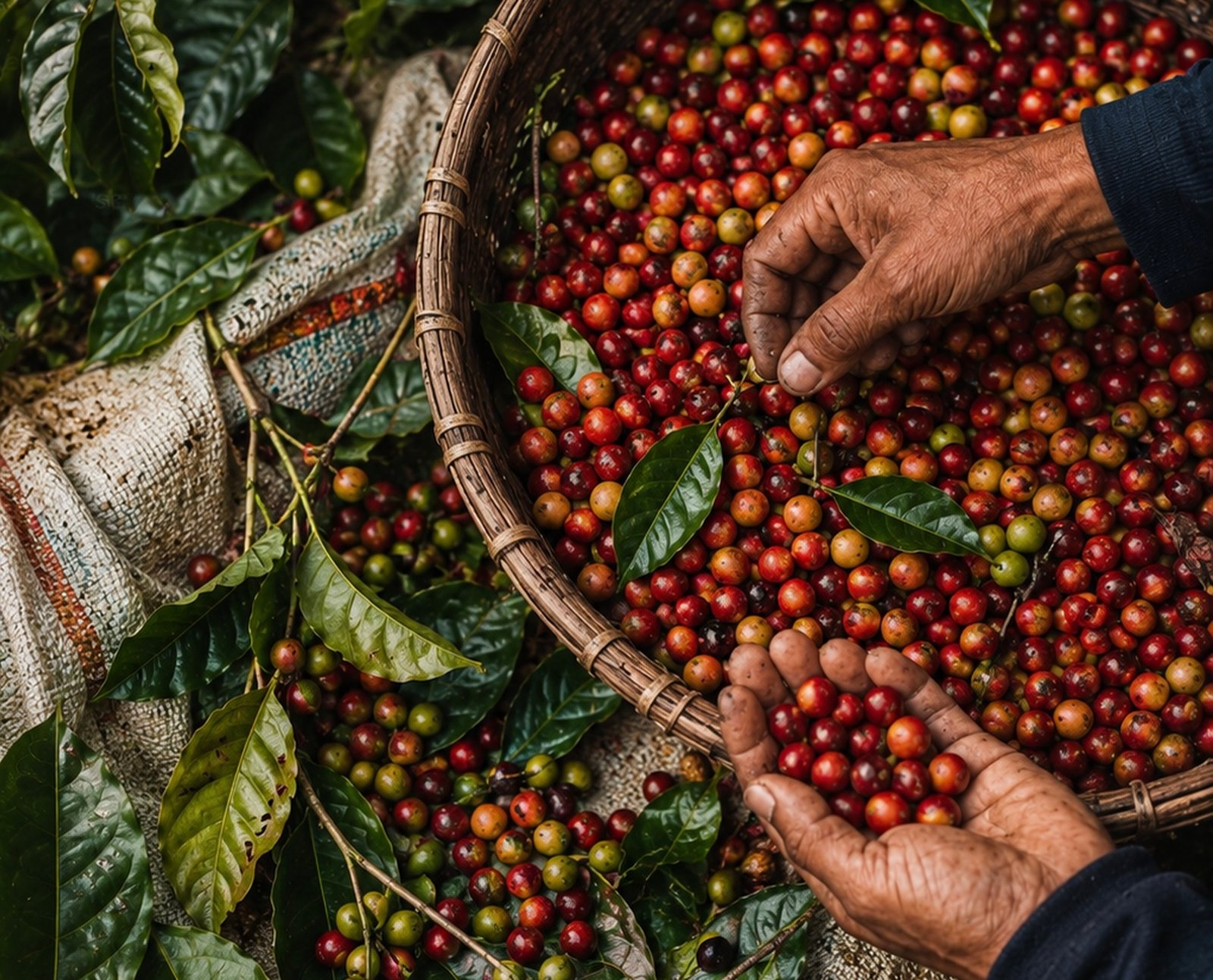
The journey of a Kavugangoma lot — from selective harvest in Muyinga Province through washing, drying and export preparation.
Read the Journal → The Buyer's DeskA Buyer's Guide to Green Coffee
What a roastery should know — and ask — before committing to a green coffee programme. Documentation, sampling and partnership terms.
Read the Journal → Terroir · AltitudeUnderstanding Origin & Altitude
Why Muyinga Province produces what it does — the relationship between elevation, varietal and the cup character it yields.
Read the Journal →Ready to source your
next great lot?
Browse available lots, request a cupping sample, or speak directly to the sourcing team. We respond within one business day.