
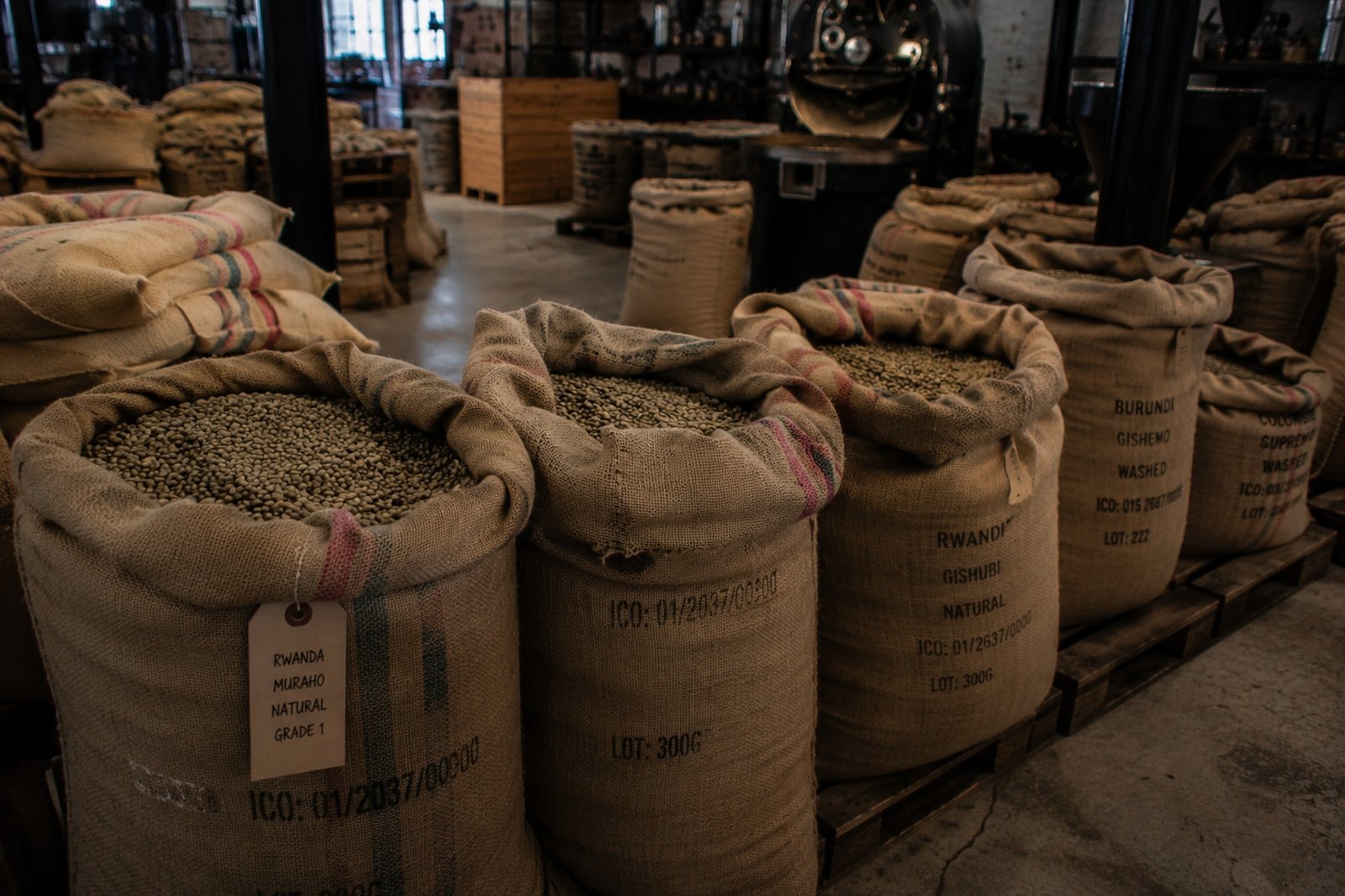
Three lots.
One cooperative.
Documented at every step.
Every green coffee we offer comes from a single Muyinga Province cooperative — FW 15+ specialty Arabica, documented from cooperative to port, available for sampling before any commitment.
Kavugangoma.
Where every lot begins.
Muyinga Province sits in northeastern Burundi, at elevations between 1,650 and 1,800 metres. The altitude, volcanic soil composition, and consistent rainfall cycles create conditions that produce coffee with the structural clarity — brightness, clean acidity, defined sweetness — that specialty buyers demand.
Kavugangoma washing station receives cherries from smallholder farmers across the surrounding commune. The station controls cherry sorting, fermentation windows, and drying conditions with the precision that determines cup quality. Every Qahwa lot is documented from cooperative through export — by paper, not by promise.
"The integrity of a green coffee buy is decided by what's behind it, not by what's said about it."
Every lot is documented.
Nothing reaches a roastery anonymous.
Six documentation points accompany every lot we offer — recorded at origin, verified at export, attached to each sample we ship and each order we fulfil.
We do not source anonymously. Every Qahwa lot ships with three independent documents — an ICO Certificate of Origin, a Burundi Ministry of Agriculture phytosanitary certificate, and the cooperative's own cupping report. Available with every sample, regardless of order commitment.
Single Muyinga Province cooperative · single washing station · FW 15+ specialty Arabica. Same source, season after season. One origin done deeply.
Cupping scores documented by the cooperative on every shipment. Recent lots have cupped between 83 and 86.5. Seasonal variation expected.
ICO Certificate of Origin, Burundi Ministry of Agriculture phytosanitary, cooperative cupping report. Available on request with every sample and every order.
Three lots.
All in stock.
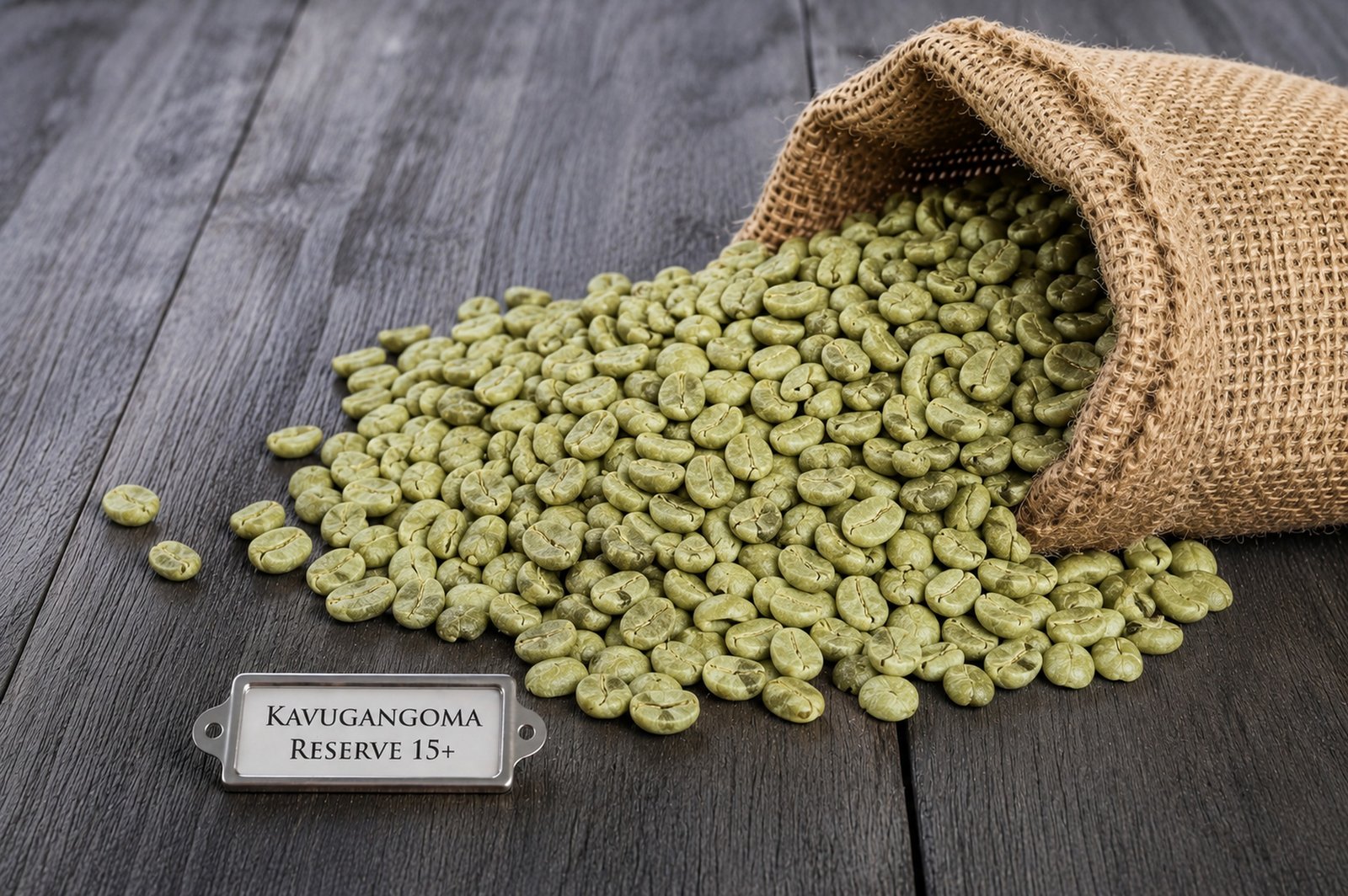
Kavugangoma
Reserve 15+
Our premium-tier Burundi Single Origin lot. The cooperative's most recent cupping report records delicate floral aroma, everlasting bold sweetness, chocolate and tea notes, potent acidity intensity, a mature blend with medium body and a purified cup. Documented at 86.5 SCA. Built for filter and espresso programmes that want clarity without losing body.
Screen size 15+ designates beans sorted above 6mm, removing underdeveloped material before export. In Burundi's grading system, FW 15+ Premium represents the highest tier of the cooperative's annual production — the lots that go first and stay in the longest relationships. Per-lot cupping report and three-document chain available on request.
"Every lot is cupped by the cooperative before export and ships with three independent documents. What reaches you has already been tested against the standard your programme demands — on paper, by date, with seal."
Kavugangoma · Muyinga ProvinceKavugangoma
Estate TT
A clean, accessible expression of the Kavugangoma terroir — pleasant floral aroma, smooth sweet taste, lemon acidity over a round body with well-blended structure and a clean cup finish. The TT screen size produces exceptional consistency in roast development, making this lot an ideal workhorse for espresso programmes that require reliable repeatability across large volumes.
TT-grade lots (screen 14–15) respond exceptionally well to medium roast development. The tighter size window means more even heat absorption — reducing the risk of tipping or scorching on longer development times. For hospitality programmes running high volumes through commercial machines, TT consistency translates directly into guest-cup repeatability.
Five steps.
Sample first. Commit with confidence.
Lot Enquiry
Tell us which lot interests you and what you're building — espresso, filter, blend. Volume, timeline, application.
Sample Shipment
Cupping sample dispatched with full lot documentation. Origin, altitude, process, screen, moisture, SCA score sheet.
Cupping Report
You cup the sample and share notes. We compare against the cooperative-issued cupping report. Roast suitability and blend integration discussed.
Order Confirmation
Volume confirmed, pricing locked, contract documented. Allocation reserved against your business name and shipment date.
Delivery & Relationship
GrainPro-lined export. Container or LCL based on volume. Same producer, same station, season after season.
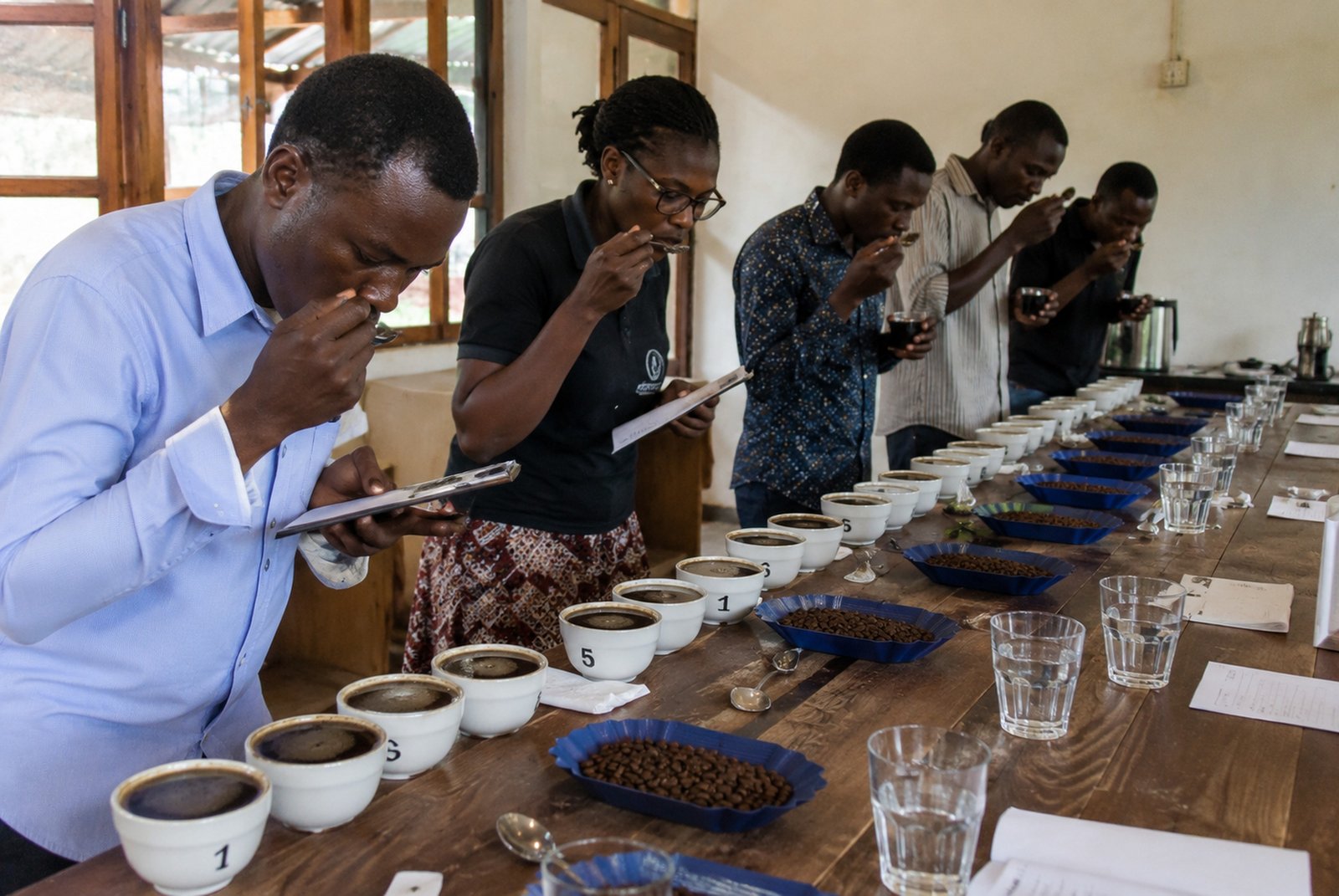
"Processing is where origin becomes character. One method, applied with discipline across three parcels — each unlocking a different register of the same Muyinga terroir."
Kavugangoma · Fully Washed
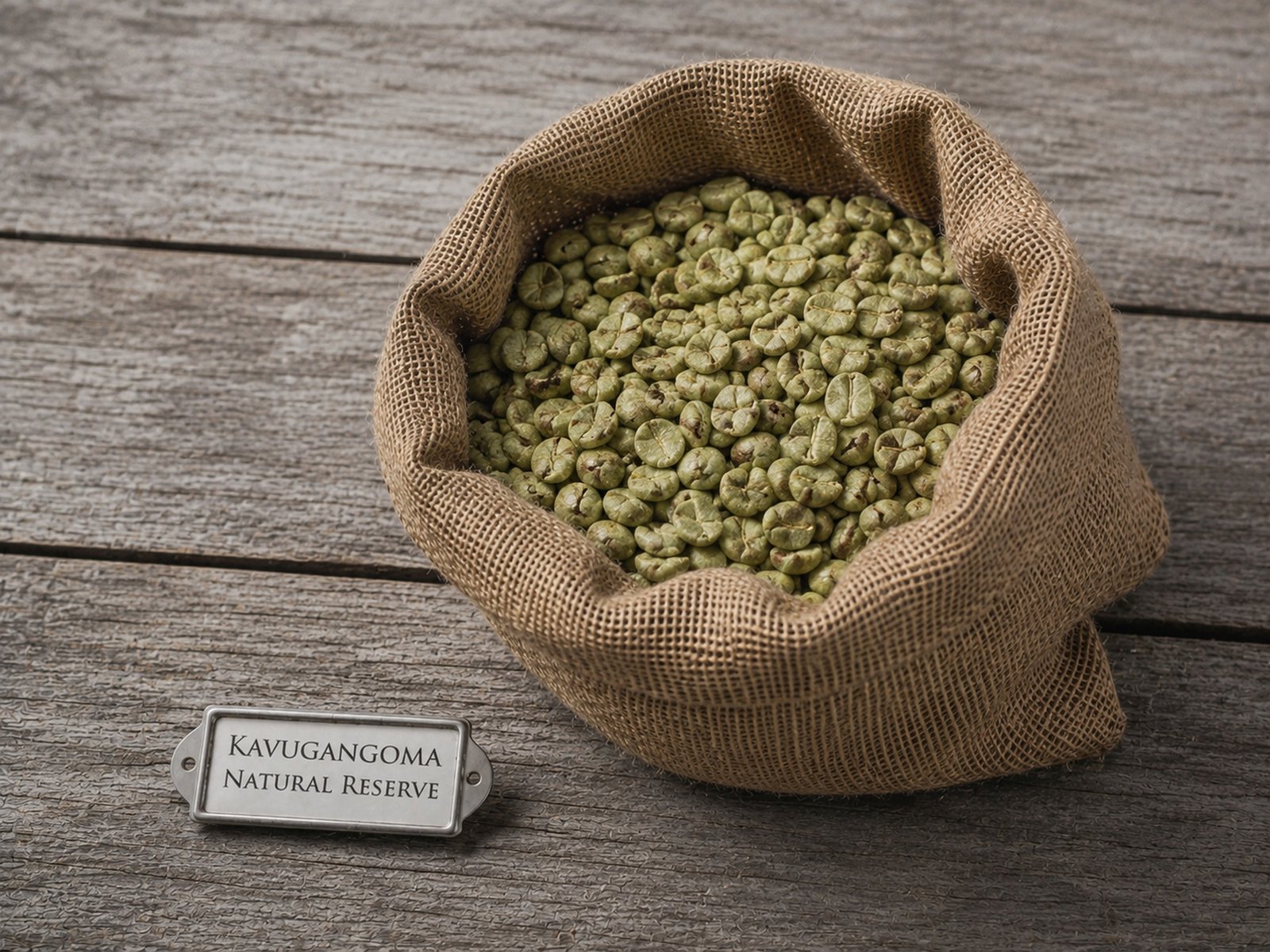
Kavugangoma
Natural Reserve
Our reserve tier from the same Muyinga Province cooperative — pleasant floral aroma, rich flavour, mature blend with vibrant chocolate notes, medium body and a clean cup with bright acidity intensity. Cooperative-cupped per shipment within the 83 to 86.5 documented range. A character-forward third lot for roasters building a documented single-origin programme with depth across multiple tiers.
All Qahwa lots are fully washed (wet processed) — cherries are depulped, fermented under controlled conditions, washed, then dried on raised beds for the period defined by ambient conditions. Wet processing produces the clean acidity and structural clarity that defines Burundi specialty Arabica at altitude. The Natural Reserve tier represents a distinct expression of this process discipline applied to a different parcel.
Fully Washed
In the washed process, the fruit is removed from the seed before drying. Fermentation happens in water tanks, dissolving the mucilage layer before the parchment-covered bean dries on raised beds. The result is a cup that reflects the seed itself — its origin, its varietal character, its altitude — without the interference of fruit sugars.
For roasters building single-origin filter programmes or transparency-forward espresso menus, washed lots offer the clearest expression of terroir and the most consistent roasting behaviour across batches.
All three Qahwa lots — Reserve 15+, Estate TT, and Natural Reserve — are fully washed (wet processed), reflecting Kavugangoma's strength in controlled fermentation and cherry sorting precision.
Document Chain
Every Qahwa lot ships with three independent documents — an ICO Certificate of Origin, a Burundi Ministry of Agriculture phytosanitary certificate, and the cooperative's own cupping report. Together these confirm origin, lot identity, screen grade, processing method, and cup quality — by paper, by date, by official seal.
For buyers building documented single-origin programmes, the three-document chain is the difference between a relationship that travels and a claim that doesn't. We provide the chain with every sample, regardless of order commitment — because a buyer's confidence should rest on documents, not promises.
Document set available on request for any active or prospective allocation. Enquire to see a redacted sample chain.
What you are really
buying.
A green coffee lot is the end product of a hundred small decisions — taken across altitude, season, soil, hands and time. Each chapter below traces one of those decisions, and the variables that determine whether a cup arrives clean, complex or compromised.
The cherry
decides first.
Quality begins at the branch. A specialty cup is impossible from underripe fruit.
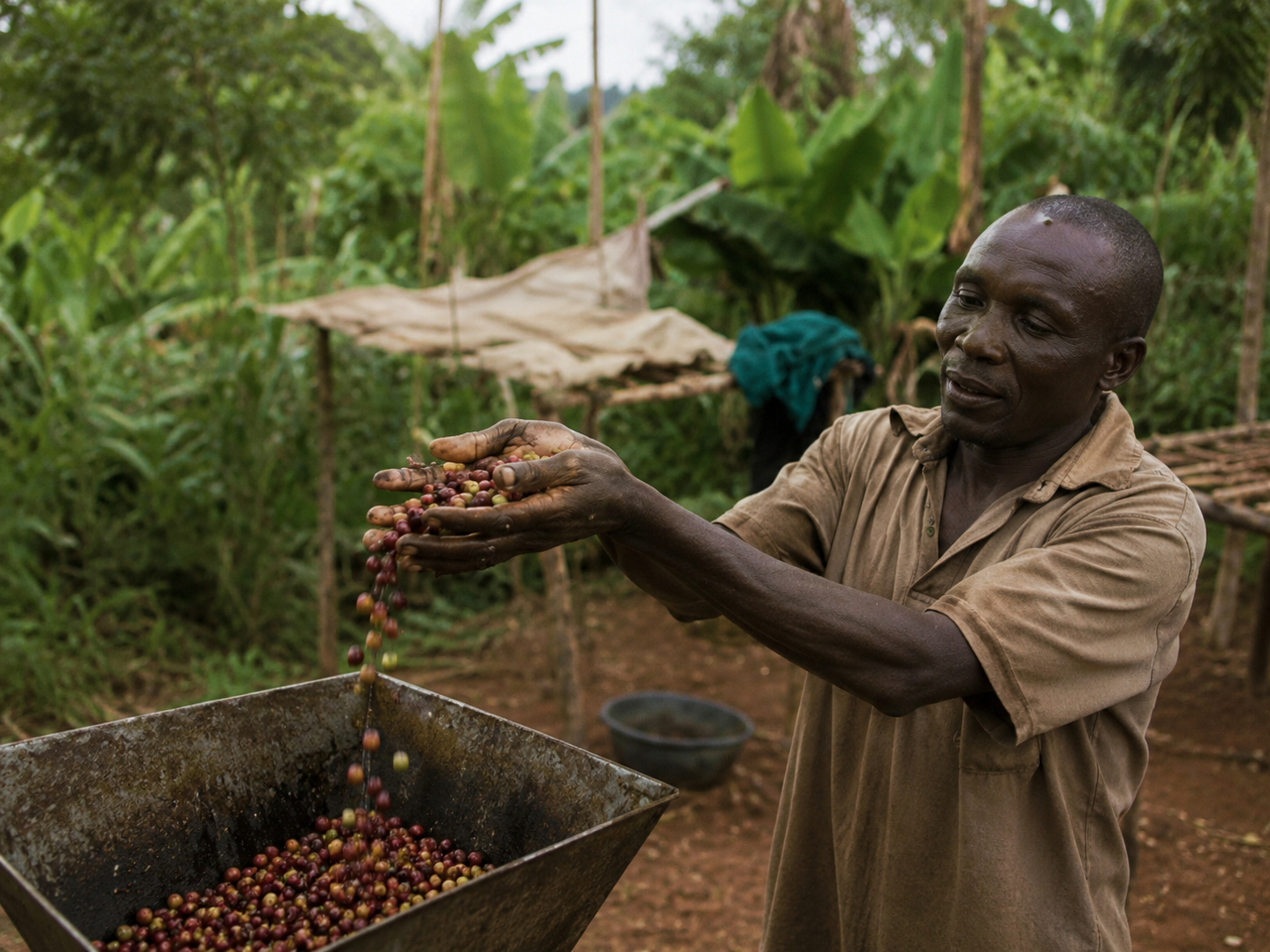
At Kavugangoma, smallholder farmers walk their plots multiple times per harvest season — picking only the deep-red, fully ripe cherries and leaving the green and overripe behind for later passes. Selective picking takes longer than strip-harvesting and costs more, but it is the single most important quality decision a farmer makes. A lot picked with discipline carries that discipline through every subsequent step.
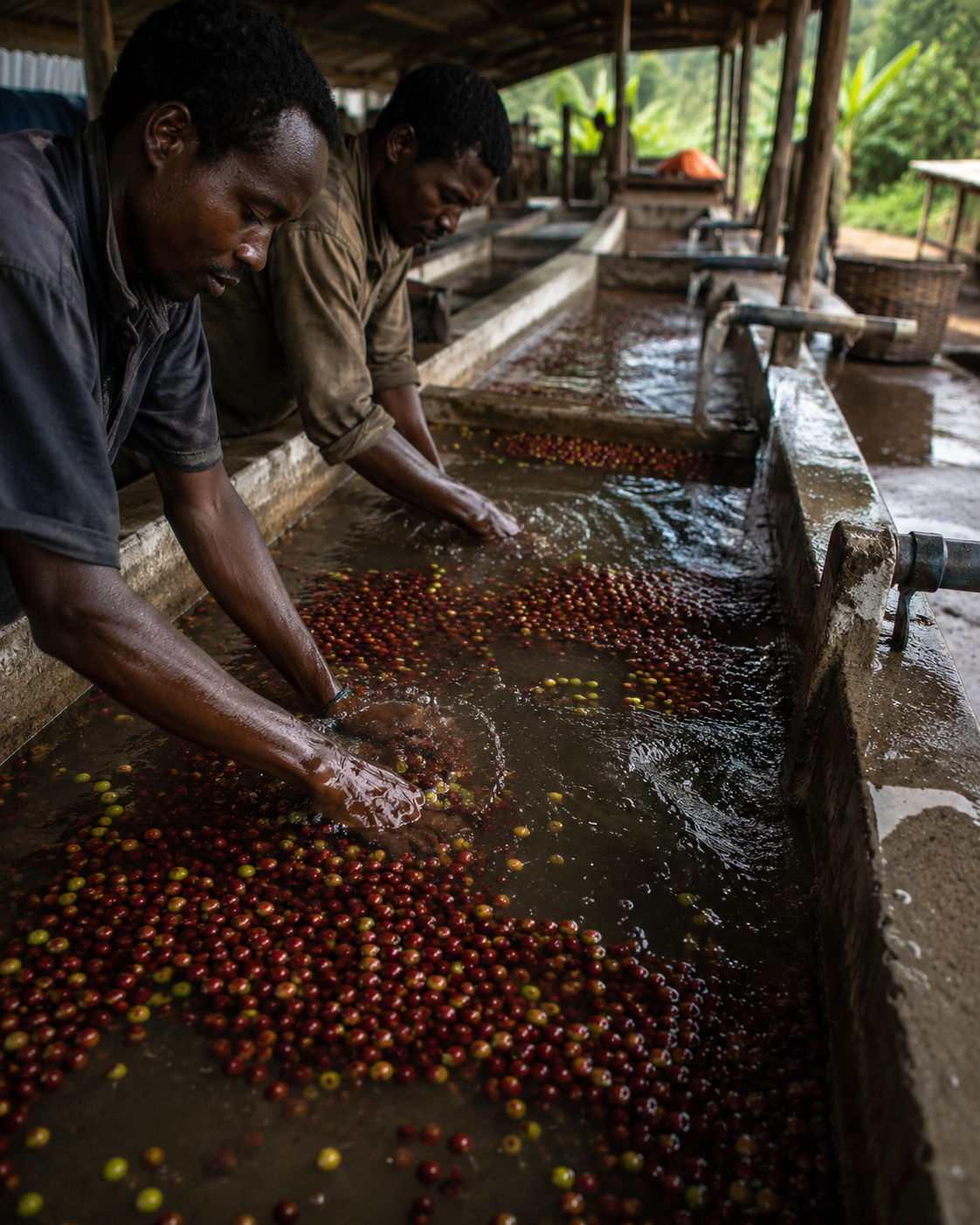
Cherries arrive at the washing station within hours of being picked. Each delivery is weighed, sorted, and floated — underripe and damaged fruit floats to the surface and is removed before any further processing begins. By the end of cherry intake, what reaches the depulper is already a tighter, more uniform population than what left the tree.
Where flavour resolves.
Fermentation is the most chemically active stage of processing. It is also the easiest to ruin.
For washed lots, the cherry is pulped — its outer skin removed mechanically — leaving the bean coated in a sticky mucilage layer. The pulped beans are transferred to fermentation tanks where naturally present microbes break that mucilage down. Done well, fermentation removes the mucilage cleanly and contributes brightness and clarity to the cup. Done poorly — too long, too warm, uneven aeration — it introduces phenolic taints, vinegar notes, or muted sweetness that no roast can fix.
Kavugangoma's tanks are monitored throughout the fermentation window. Operators check pH, ambient temperature, and the physical feel of the parchment-coated bean — when the mucilage no longer slips between the fingers, fermentation is complete. The bean is then washed under clean water in graded channels and moved to the drying tables.
The longest stage.
If fermentation builds the flavour, drying preserves it. A rushed dry is a quiet defect that surfaces on the cupping table six months later.
Washed parchment dries on raised beds for 14–21 days, turned by hand multiple times daily to ensure even moisture release. The cooperative monitors moisture content throughout the drying window — a rushed dry can introduce defects that surface on the cupping table six months later, while an over-dried bean loses aromatic complexity.
The drying target is a green-bean moisture content of 10.5–11.5%. Above that range, the bean is unstable for export and risks mould during shipping. Below it, the bean dries out and loses aromatic complexity. The window is narrow. At altitude, with cooler nights and lower humidity, that window is achievable; at lower elevations it is significantly harder to hit consistently.
From parchment
to green.
Milling is where a lot becomes a lot. Before this stage it is parchment from a station. After it, it is a defined commercial offering.
Dried parchment moves to the dry mill, where the parchment hull is removed and the green bean is exposed for the first time. The beans then run through a sequence of sorting machines: density tables remove low-density beans, screen graders separate by size, and optical or hand sorting removes any final defects — black beans, broken material, foreign matter.
Burundi's grading system separates lots by screen size and density. Reserve 15+ designates FW 15+ Premium beans of screen 15 or above (sieve mesh ~6mm). Estate TT designates FW 15+ Commercial beans of screen 14–15. These are not arbitrary classifications: the larger and denser the bean, the more uniformly it absorbs heat during roasting, which translates directly into cup consistency.
The last
quality gate.
A lot can survive every prior stage and still be ruined by the journey. Specialty coffee fails most often in transit, not at origin.
Before export, every lot is cupped one final time at the dry mill. Cupping data — SCA score, sensory descriptors, defect notes — is recorded against the lot identifier. We require this documentation before any lot is offered to a buyer; nothing leaves Kavugangoma without a current score sheet attached.
Bagging is done into GrainPro liners inside jute bags. The hermetic GrainPro layer protects the green bean from humidity fluctuations and oxidation during the sea voyage, which can otherwise degrade the cup by the time it reaches a roastery. From Bujumbura, lots transit through Dar es Salaam or Mombasa, then onward to Jebel Ali or Cape Town. Total journey time: typically four to eight weeks.
Why no two
crops are alike.
A specialty coffee is a record of a single season at a single altitude under a single set of conditions. The variables below shape what arrives in the cup — and explain why a lot from one harvest does not simply repeat in the next.
Higher elevations slow cherry maturation, allowing sugars and organic acids to develop more fully inside the seed. The cooler nights and warm days that come with altitude are the single most reliable predictor of cup brightness and structural acidity.
Rainfall timing matters more than quantity. Burundi's two-season pattern — long rains for cherry development, dry months for drying — supports both selective harvest discipline and predictable drying windows. A wet drying season can compromise an entire crop.
The volcanic soils of Burundi's central plateau retain moisture and minerals well. High organic content and good drainage produce cherries with more concentrated sugar development — the foundation of body and sweetness in the cup.
Arabica thrives in a narrow temperature band. Too warm and ripening accelerates — reducing complexity. Too cool and yields drop. Muyinga Province sits in the sweet spot for specialty Arabica, with cool nights at altitude moderating daytime heat.
"A green coffee lot is not a recipe being repeated. It is a recording of a season — the rains, the picking, the days on the bed, the hands that turned it. We carry lots because the documents record the season they came from."
Qahwa Coffee Group · Sourcing Notes
One origin done deeply.
Then a second.
Qahwa's growth philosophy is depth before breadth. Burundi Single Origin is the foundation. Further East African origins are in development — but no second origin enters our portfolio until it carries the same three-document chain, the same per-lot cupping discipline, and the same cooperative-level traceability we ship today.
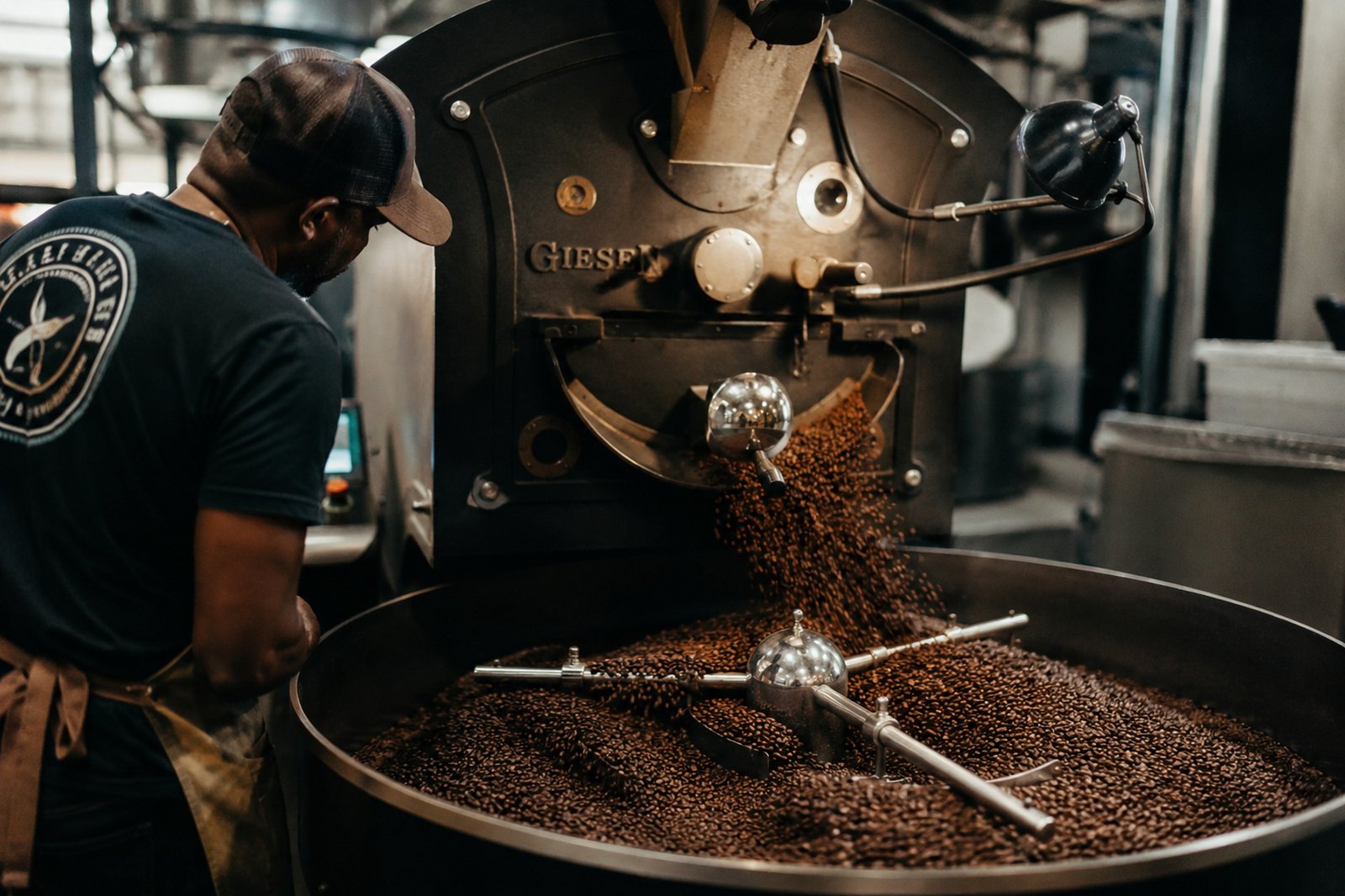
"Every lot ships with a cooperative-issued cupping report, an ICO Certificate of Origin, and a phytosanitary certificate. The documents make the trip — so the buyer's confidence does too."
What working with Qahwa
actually carries.
Three documented anchors of the Qahwa buy. Not claims of relationship — claims that travel with paper, with seal, with date.
Cooperative-cupped.
Documented at export.
Reserve 15+ documented at 86.5 on the cooperative's most recent cupping report — clear specialty tier. Cupping report attached to every sample we ship. Every buyer cups before they commit.
ICO. Phytosanitary.
Cupping report.
Three independent documents accompany every Qahwa shipment — the ICO Certificate of Origin, the Burundi Ministry of Agriculture phytosanitary certificate, and the cooperative-issued cupping report. Provided with every sample, regardless of order commitment.
Sample requests answered
in one business day.
Real people. No automation. The person who replies to your enquiry has the lot documents on hand. No call queues. No routing scripts. Direct contact with the sourcing team.
Recent lots have cupped between 83 and 86.5 SCA on the cooperative's own protocol. Seasonal variation expected. Per-lot cupping report shipped with every sample.
ICO Certificate of Origin, Burundi Ministry of Agriculture phytosanitary, and cooperative cupping report. Three independent documents on every shipment.
Structured for roastery and hospitality procurement. Pricing and documentation are built for professional buyers, not hobbyist quantities.
Every enquiry answered within 24 hours. Real people, no automation. You speak directly to the sourcing team — not a sales function.
Cup it before
you commit.
We send cupping samples to qualifying roasteries, cafés and hospitality groups. Tell us which lot interests you and what you're building. We'll handle the rest.
Sample shipped with full lot documentation and SCA cupping data
No minimum order commitment required to receive a sample
Response and dispatch confirmation within one business day
You speak directly to the sourcing team — not a middleman
Which lot are you
interested in?
"The integrity of a green coffee buy is decided by what's behind it, not by what's said about it."
— Qahwa Coffee Group · Sourcing Philosophy